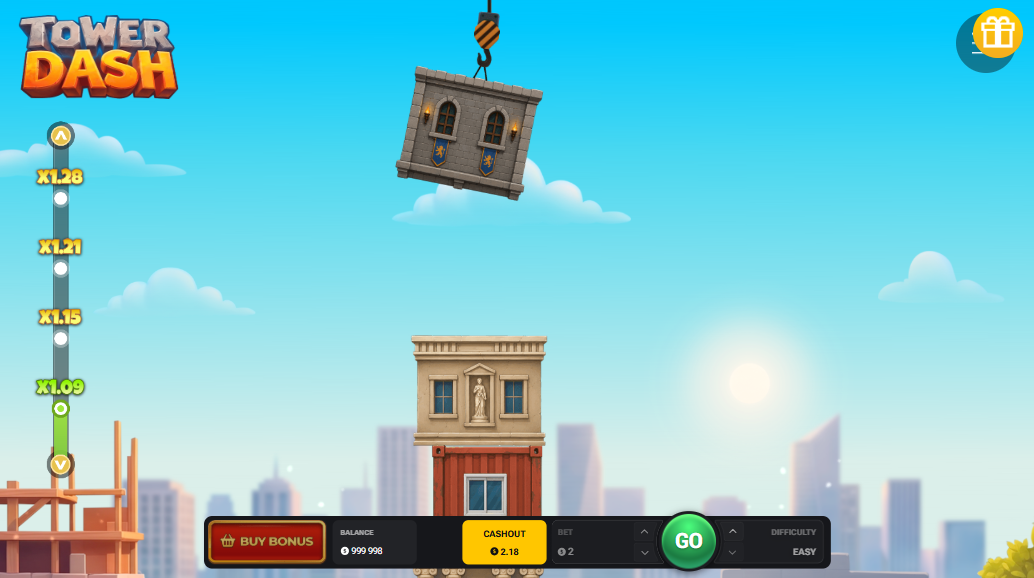
Your finger touches the screen and the first block of Tower Dash drops away from the crane hook. It settles square on the ground, and the multiplier beside it ticks upward for the first time.
That small moment is the whole game in miniature. Tower Dash is a short-round instant game from the studio InOut Games, and each round is one tower built a single block at a time. You set a stake, release blocks one after another, and decide whether to push on or pocket the current value.
The setting is a sunny building site. Cranes lean over everything, stacked blocks crowd the front of the frame and a city skyline fills the horizon, all painted in a bright, cheerful palette that stays upbeat even with real money on the line.
What follows tracks one tower from its base to its end: the stake, the swing, the landing, the moment to stop and the moment it all comes down. Then come the two special blocks, the published numbers, how fairness works, the free version, and a few things to weigh ahead of any paid session.
Nothing here hides the hard parts. A tower can fall on the very first drop.
Setting the stake in Tower Dash
Every round opens before any block moves. The stake comes first, and it stays fixed until the tower either banks or falls.
| Step | Detail |
|---|---|
| Pick the stake | Choose the amount for this one tower. It is at risk from the first block until you cash out. |
| Open the rules screen | Each casino's build comes with its own game rules, which give the stake range, any difficulty settings and the release date. Read the figures there, since builds can vary. |
| Check the mode | Make sure you know whether this is the free demo, funded by virtual chips, or a paid round. |
| Start the round | Confirm the amount and the first block swings into view. |
| Size it against the session | A stake that is small next to your budget leaves room for several towers rather than one. |
A short look at the rules screen is worth the few seconds it takes. Nowhere else shows the precise limits of the Tower Dash build you have open, or the RTP it is set to.
Many players also settle the overall session budget at this stage. Fixing the total once, before the first tower, removes the urge to raise it later in the heat of a run.
The crane and the swing
Once the round starts, a crane arm carries a block into view. It does not hang still. It rocks left and right on its cable, passing back and forth over the stack.
Your part is a single tap. A touch of the screen, or a mouse click on desktop, frees the block and drops it. There is no second control to steer it once it has left the hook.
It is easy to feel that the tap is a test of reflexes. It is not. The tap simply tells the game to release the next block; how that block lands is settled by the game's certified random number generator, as is every other result. Holding out for some ideal spot in the arc, tapping quickly or slowly, or spending hours in the demo does not shift the odds either way.
That is worth holding on to, because the visuals are so convincing. The swaying load and the growing stack invite the idea of aiming. Enjoy the rhythm of it, and keep your attention on the choice that really belongs to you in Tower Dash: one more block, or stop.
Between drops, the crane swings back with the next load and the cycle repeats.
A clean landing
A good drop is the moment Tower Dash is built around. When a block comes to rest squarely on top of its neighbour below, several things happen together.
- The tower grows by one level.
- The multiplier rises, and so does the amount the tower would pay if you banked now.
- You can now cash out, an option open between blocks.
- The crane returns with the next load, already swaying.
- Your stake stays in play. The higher figure only becomes yours once you cash out.
- Each new level adds reward and exposure at once: the tower is worth more, and so is what a single miss would take.
One tidy landing guarantees nothing for the following drop. Each drop is resolved on its own, and a neat streak of blocks says nothing about whichever one comes next.
New players sometimes read a smooth sequence as a sign that the tower is safe. It never is, at any height. The calm after a good landing is better spent checking the current multiplier against what you hoped to take from this round.
Deciding when to stop
This is where the one genuine choice of Tower Dash lives. In the gap after each landing, you may cash out. Do so and the round closes, paying the stake times the current figure. Leave it and another block arrives, with the multiplier ready to rise or the tower ready to come down.
An example shows the trade more plainly than any rule. Take it purely as an illustration, not as a statement about where any multiplier appears. Say you stake €4 and cash out when the multiplier reads x2.25: the return is €9. Now suppose you leave that same €4 in play and the tower falls. The stake is gone.
Same tower, same height. The difference is one decision.
Since nobody can know what the next block will do, a cash-out point is best chosen in advance. Some players pick a modest target and stick to it; others accept that taller towers are rarer and budget for long stretches without one. Either is a matter of taste, not a method that tilts the result.
Kas parasti notiek nepareizi, ir novirze. Pieticīgs mērķis pakāpeniski pieaug pēc laba sākuma, tad vēl augstāk, un plāns izšķīst bloku pa blokam. Steidzīgās izvēles, kas veiktas, kamēr krāns ir kustībā, beidzas tajā pašā vietā.
Ēnot augstu reizinātāju, lai atgūtu iepriekšējo zaudējumu, ir visizplatītākā šīs kļūdas forma, un tas parasti palielina zaudējumu.
Kad tornis krīt
Agri vai vēlu viens bloks trāpa garām. Apļi, kas zaudēti sliktas nokrišanas dēļ, vienmēr atkārtojas tajā pašā secībā.
- Atbrīvotais bloks sasniedz kaudzi, bet neizdodas satvert apakšējā līmeņa malu.
- Tornis zaudē līdzsvaru un gāžas, ņemot līdz katru līmeni.
- Spēle apstājas nekavējoties, un izņemšana vairs nav iespējama.
- Šis torņa likme ir zaudēta, lai arī kādu reizinātāju kaudze bija sasniegusi.
- No šejienes jūs varat noteikt jaunu likmi un sākt jaunu torni vai pakāpties prom.
Krist nav soda par sliktu mērķi, nedz arī pazīme, ka pienācis laiks labākam tornim. Katrs aplis sākas no jauna un neatceras neko, tāpēc iepriekšējie torņi, gari vai īsi, neko neteiks par nākamo.
Šeit noderīgs ieradums ir pārtraukums. Pirms pieskaršanās jaunam aplim, pārbaudiet, cik no sesijas budžeta palicis un vai esat sasniedzis zaudējumu limitu, ko noteicāt sākumā. Ja tā, tas ir signāls, lai beigtu dienu, nevis paaugstināt likmi, lai atgūtu.
Satikšanās ar TNT kasti
Daži no krāna nesto nav parasts bloks vispār. Parādās arī TNT kastes, un tās ir sprādzienbīstamas.
Ja nokrītat uz vienas, skrējiens ir beidzies. Tas darbojas kā neizdevusies nokrišana: tornis nolaidīsies un šī likme tiek zaudēta. Cik augsts kaudze ir izaugusi un cik labs izskatījās reizinātājs, TNT kaste nekavējoties aptur visu.
Te nav nekā, ap ko plānot, un nav publicēta likme, ar kuru šīs kastes parādās. Tās pieder pie raundu nejaušajiem iznākumiem, tāpat kā nosēšanās. Garš periods bez vienas nepadara to kavētu, un sakrist ar vienu neatstāj nākamo torni drošāku.
Ko kastes maina, ir tas, kā saprātīgs spēlētājs domā par augstumu. Katrs papildu bloks Tower Dash var nodrošināt tīru nosēšanos, netīru vai sprādzienbīstamu kasti, un reizinātājs jebkurā brīdī atspoguļo naudu, kas joprojām ir riskā. Tādējādi jūsu aicinājuma svars bankā.
Priecīgā debess līnija atrodas virs spēles ar reālu mīnus. Tornis ir vērts tikai to, ko jūs iemaksājat no tā.
Ietaupīts ar Wild bloku
Otrais īpašais bloks darbojas pretēji. Wild bloki var glābt sliktu nokrišanu, tādējādi tornis var turpināt augt. Šeit ir tas, kā Wild bloks atrodas blakus citiem veidiem, kā nokrišana var noritēt.
| Situācija | Rezultāts |
|---|---|
| Parasts bloks nolaižas tīri | Tornis pieaug par vienu līmeni un reizinātājs pieaug. |
| Parasts bloks trāpa garām malai | Kaudze sabrūk, spēle apstājas, un likme tiek zaudēta. |
| Wild bloks saskaras ar nekārtīgu nokrišanu | Nokrišana var tikt glābta, un tornis turpina augt. |
| TNT kaste tiek trāpīta | Spēle apstājas nekavējoties; likme tiek zaudēta. |
| Jūs nospiežat izņemt starp blokiem | Spēle beidzas un maksā likmi reizinātu ar to reizinātāju, kas ir redzams. |
Satikšanās ar Wild bloku ir labas ziņas, lai gan tas nav bruņu. Netīra nosēšanās var tikt glābta; TNT kaste joprojām beidz lietas, un izredzēs uz vēlākajiem blokiem paliek tādas pašas.
Tāpat kā pārējā raundā, Wild bloka laiks ir atkarīgs no nejaušā skaitļa ģeneratora. Nav publicētu skaitļu, cik bieži tie nāk, tāpēc gaidīt vienu pirms izņemšanas nav jēgpilns.
InOut Games un Tower Dash
Studija, kas izstrādājusi spēli, ir InOut Games, instant spēļu izstrādātājs, kas balstīts uz īsiem raundiem un vienu skaidru lēmumu. Šis nosaukums cieši atbilst šim paraugiem: viena likme, viens tornis un viens jautājums, kas atkārtojas pēc katra bloka.
Ir noderīgi atšķirt divas lomas, ko spēlētāji reizēm sajauc. Studija projektē un piegādā spēli. Tiešsaistes kazino, kas to uzskaita, ir atsevišķa uzņēmuma daļa, un tas ir kazino, kas tur licenci, pieņem iemaksas, pārbauda kontus un izmaksā. Jautājumi par jūsu bilanci, maksājumu vai konta limita jautājumiem jānosūta kazino.
Šī dalīšana arī izskaidro, kāpēc detaļas var atšķirties starp vietām. Katram kazino ir savs noteikumu lapa, kurā norādīts, kad spēle tika laista klajā, cik zemas un augstas likmes var būt, dažādas grūtību iespējas un izmantotā RTP.
Maksājamās Tower Dash kārtas notiek tikai licencētos tiešsaistes kazino, kas piedāvā studijas nosaukumus, un spēle ir rezervēta tiem, kas ir 18 vai vairāk. Vietne, kas piedāvā spēli bez redzamas licences vai lejupielāde, kas izskatās pēc oficiālās lietotnes, ir aizdomīga. Viss notiek pārlūkprogrammā, nekas nav jāuzstāda.
Tower Dash skaitļi
Daži publicētie skaitļi iezīmē spēles ilgtermiņa raksturu.
- RTP of 95.95%. This return-to-player figure is a mean, worked out across an enormous count of rounds. It says nothing firm about one session, and brief sessions often finish far from it.
- Where to confirm it. Each casino's rules page states the exact RTP its build runs.
- Medium to high volatility. Results come unevenly, with stretches of early falls broken now and then by taller towers. A budget built for patience copes better than one built for a quick win.
- Top payout: 10,000x your bet. Only the tallest towers reach this figure, and it works as a ceiling: one round can never pay more.
- What the cap means in reality. A tower of that height is rare by nature, and planning a session around it tends to drain the budget first.
- No per-block figures. There is no published multiplier for each level, nor any rate for TNT crates or Wild blocks, so a site claiming to list them is guessing.
- Release date, stake range and difficulty settings. Look these up on each casino's rules page; no fixed figures apply.
Taken together, the numbers describe a game whose excitement mostly lives in the middle of the tower, with the very top a long shot.
Fair rounds
Each outcome, opening landing included, comes down to the game's certified random number generator. Every Tower Dash round therefore stands alone. Several early collapses won't make a tall tower likelier, and a tall tower won't hasten the next collapse. Nothing evens things out over a session.
It also means the tap is no lever on the result. You choose when to release, but the generator decides how the block lands, whether a TNT crate appears and whether a Wild block saves a messy drop.
This is where a whole market of fake tools tries to step in. Predictors, bots, paid signal groups and modified APK files all claim to see the next block before it falls. None of them can read a certified generator, and plenty are simply after your money, log-in details or card numbers. Treat unlicensed sites dressed up to look like the game with the same suspicion.
The safe route is the plain one: a browser, a licensed casino and funds you could part with comfortably.
Practice and devices
There are two ways into the game and two kinds of screen to play it on.
Demo
A free demo lets you build towers with virtual chips. You don't have to register or pay in, so stacking can begin right away.
The demo plays like the full version. Blocks land or miss, booby-trapped crates and Wild blocks appear, and the multiplier climbs after clean landings. Use it to watch how cashing out works and how fast a round can end.
Two points matter. Demo wins are virtual and cannot be withdrawn. And practice brings familiarity, not an edge: hours in the demo teach the layout and the rhythm, but they do not improve how blocks land.
The demo runs on virtual chips and needs no account or deposit.
Browsers and phones
Tower Dash plays in browsers on both phones and computers. You won't need an app, and any file sold as an official download is best avoided.
Phones get a portrait layout driven by one touch control, handy for one-handed play. On a computer, the same tower plays in a browser window with a click in place of the tap.
A stable connection is the main practical need, so finish or cash out a round before moving somewhere with patchy coverage. On a small screen, check the stake and the mode carefully before starting.
Before the first real tower
Switching from virtual chips to a funded balance is the moment to reread a few honest truths.
- Any block that slips past the edge finishes play there and then, costing the bet whatever the height.
- Hitting a TNT crate does the same, regardless of the tower's size.
- Expect lumpy results from a volatility rating of medium to high, with wins arriving in uneven clumps and losing runs counted as ordinary.
- Only the very tallest towers reach the top win, and no payout goes past 10,000x your bet.
- Tapping lets go of a block; it leaves the random result untouched.
- There is no system, pattern or gadget that guarantees a payout.
- Real-money play means a licensed casino carrying InOut Games titles, an account, identity checks and a deposit; the game then sits among its instant games.
- Casino bonuses have their own terms. See whether instant games count toward wagering, whether this title is on the excluded list, and which top bet limit applies while the bonus runs.
- Begin with small amounts, fix a budget and a session length, step away regularly and lean on any limit settings for deposits or playing time your casino has. For a break lasting weeks or months, ask about self-exclusion.
- Should play begin to weigh on you rather than entertain you, talk things over with a professional help organisation.